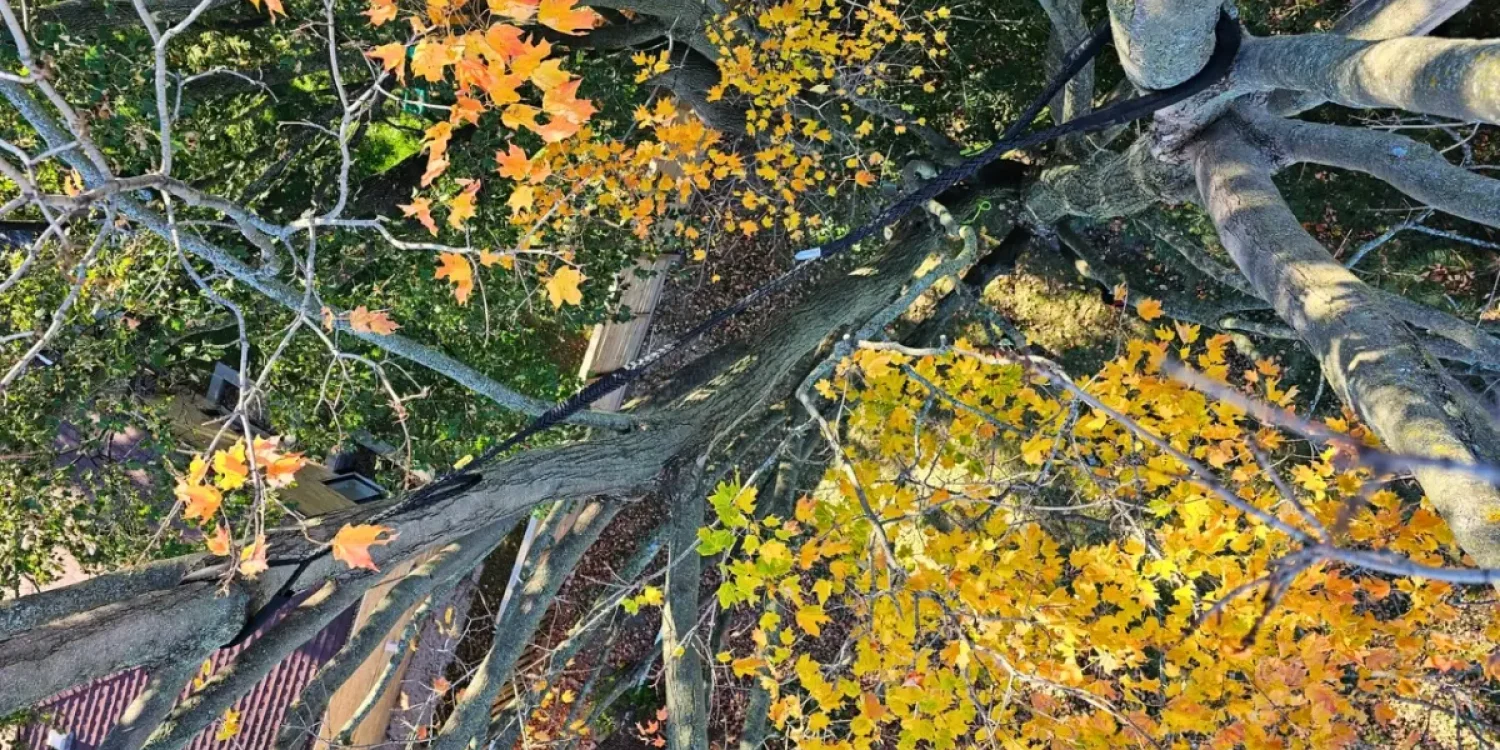
Tree cables are an important tool for providing supplemental support to weak branch unions, co-dominant stems and heavy limbs. But they aren’t a one-time fix. At J&C Tree Services, we climb a lot of mature trees across Mississauga and the GTA, and some of the most common problems we find come from cabling systems that were installed years ago and never checked again. A cable that protected a tree for years can start to harm it when it reaches the end of its service life.
Every photo in this post comes from a tree we worked on this fall, so you can see what these problems look like up close.
What Do Tree Cables Do for a Tree?
A cable connects two or more stems or limbs high in the canopy so they share the load during wind, snow and ice. Most are installed on trees with a weak union, such as a co-dominant trunk where two leaders grow side by side with bark pinched between them. Without support, that union can tear apart in a storm.
Modern systems use either steel cable or braided synthetic rope. Many modern synthetic cabling systems are designed to allow some natural movement in the canopy while limiting excessive movement that could put stress on a weak branch union. The amount of slack depends on the system being used and the tree’s structural needs.
How Long Do Tree Cables Last?
Some synthetic cabling systems have manufacturer-recommended service lives of around 8 to 10 years, although this varies by product. Steel systems can last considerably longer when properly maintained, but the hardware, attachment points and condition of the tree still need regular inspection.
In many cases, the tree’s growth will determine when a system needs attention before the cable material wears out. A fast-growing silver maple can outgrow its cable well before the material wears out. A cable that fit perfectly five years ago may be doing damage today.
Signs Your Tree Cables Need to Be Replaced
These are the four problems we run into most often when we climb up to check a cable.
The Cable Is Choking the Stem
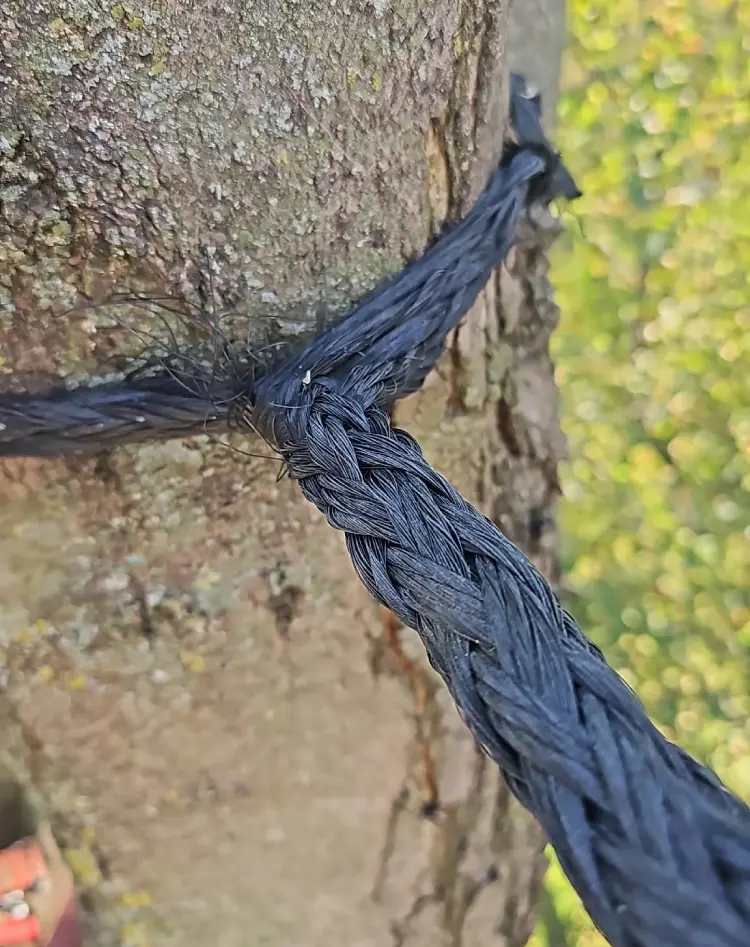
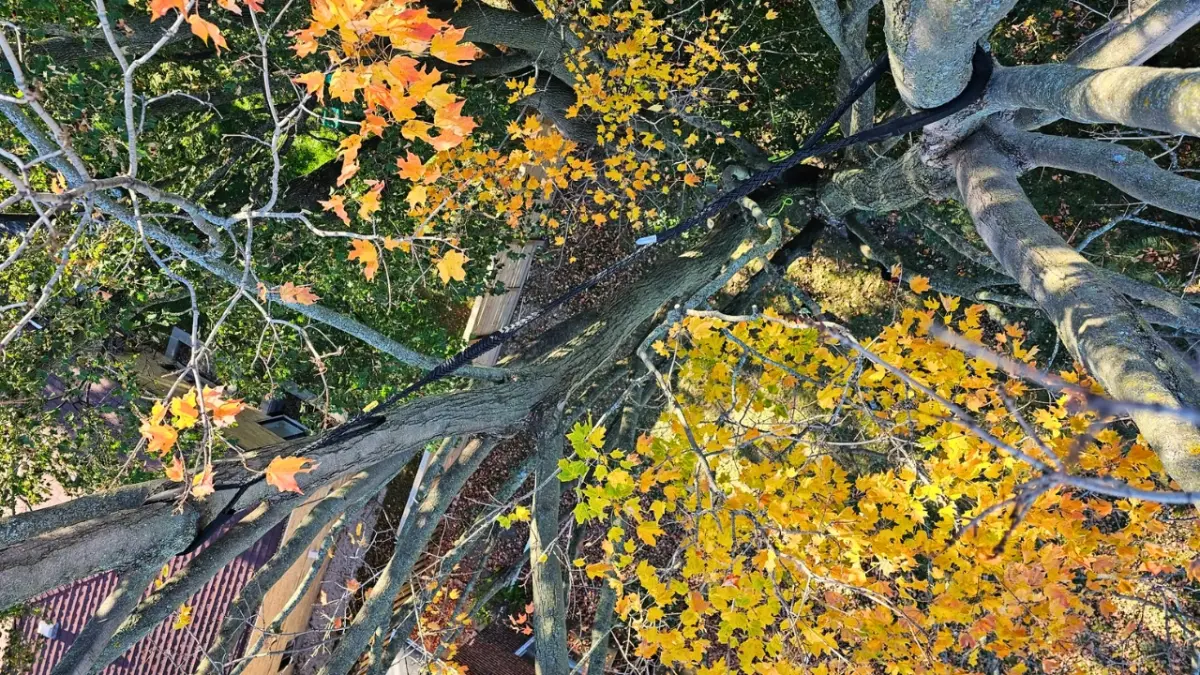
This expired cable is choking the stem and needs to be replaced before it causes further issues.
Stems get thicker every year. A cable loop sized for a younger trunk eventually becomes too tight. In the photo above, the old loop is pressing into the stem. The pressure can damage the living tissues beneath the bark, including the phloem, which transports sugars through the tree. Over time, continued constriction can interfere with normal growth and weaken the area around the attachment point.
Bark Is Growing Over the Cable
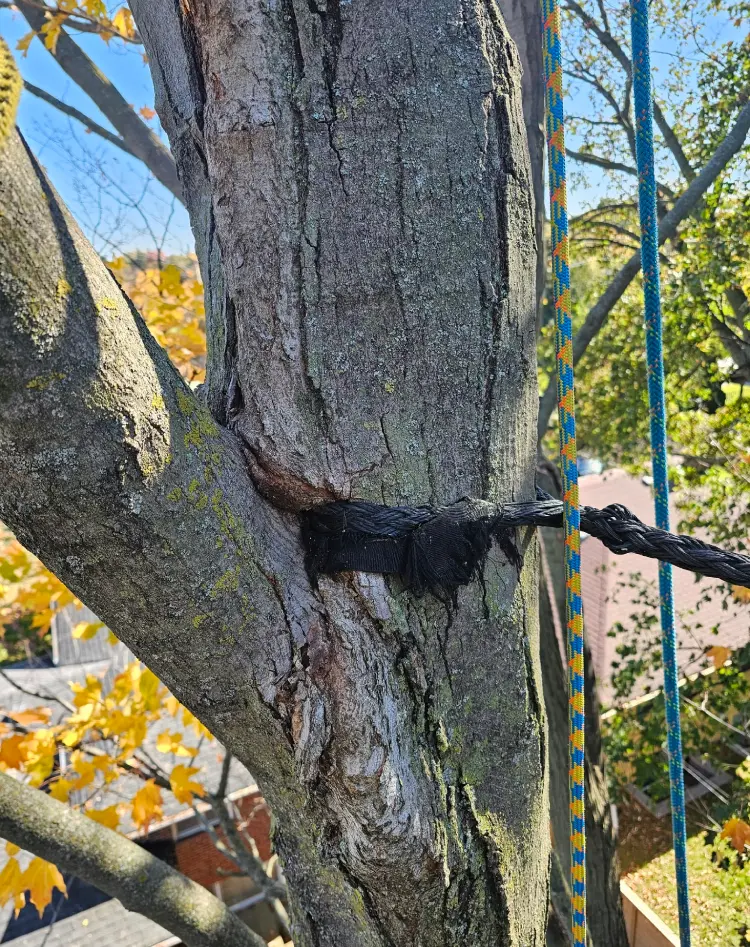
This expired cable needs to be removed. The bark has been growing around it for a few years.
Once a cable starts to constrict a stem, the tree tries to grow around it. You can see the ridge of new wood bulging above the cable line where the bark has started to swallow it. When a tree starts growing around an old cable, removal becomes more complicated. The cable may be partly embedded in the wood, and cutting it out without assessing the surrounding tissue can cause additional damage. An arborist needs to examine how deeply it has been incorporated into the stem and determine the safest way to deal with it.
The Cable Is Stretched, Frayed or Falling Apart
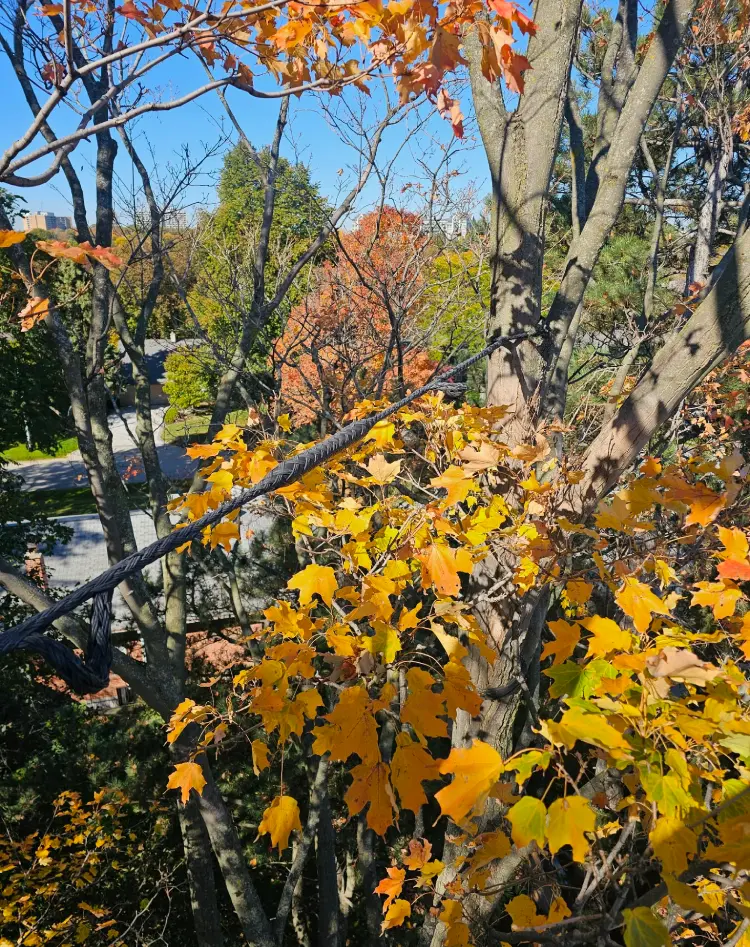
This expired cable is stretched to its limits and is starting to fray and deteriorate.
Synthetic rope breaks down from UV exposure, constant movement and years of freeze-thaw cycles. Once it stretches, it no longer catches the limbs when a storm hits, so the tree is carrying the full load even though it still looks supported.
Watch for:
- Loose, fuzzy fibres sticking out along the rope
- A section that looks thinner or flatter than the rest
- Faded or chalky colour on the outer braid
- Far more sag than the cable had when it was installed
- A loop that has slipped down from its original position
The Tree Has Outgrown the Original Setup
Sometimes the cable looks fine, but the tree has changed. As limbs grow longer and heavier, or as pruning changes the canopy’s structure, the original support system may no longer be positioned appropriately. The cable may need to be relocated or the support system reassessed.
What Happens If You Leave an Old Cable in Place?
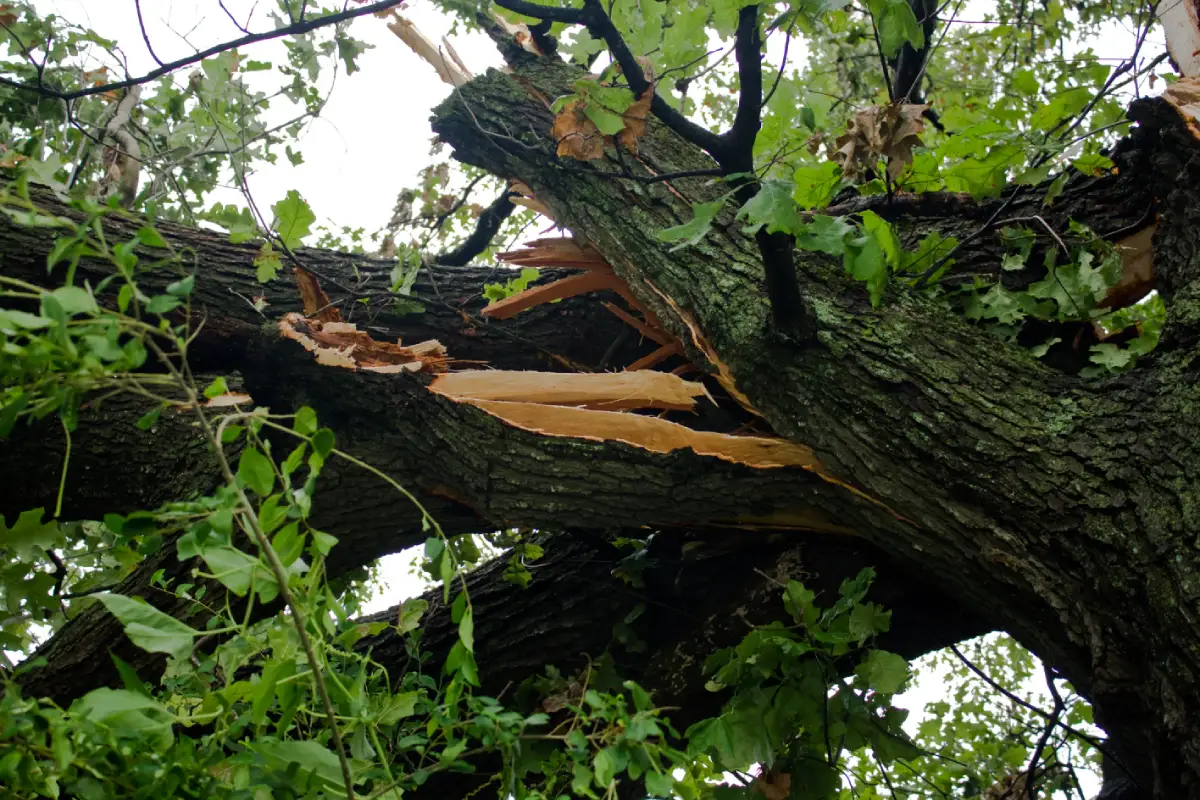
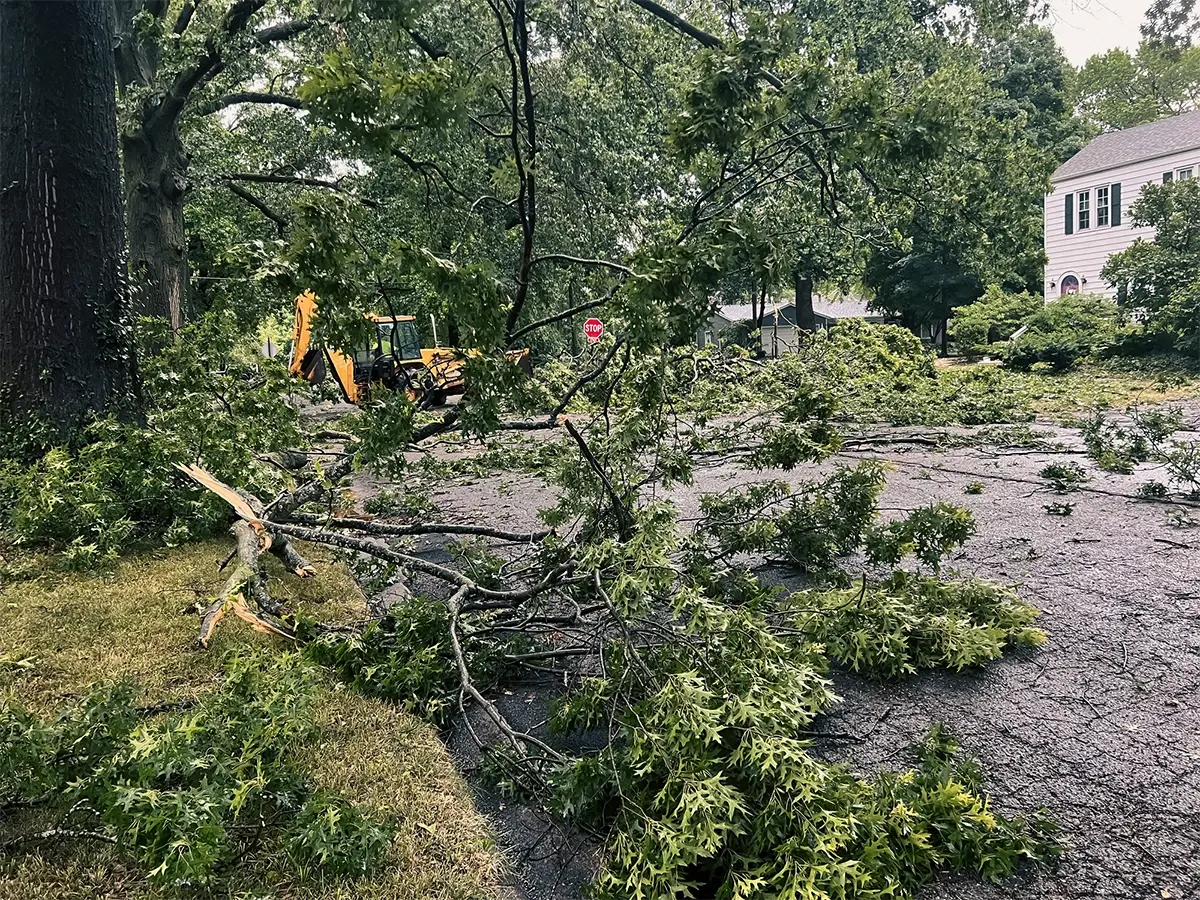
If a cable fails during a windstorm, the stems or limbs it was supporting can move beyond their normal range, increasing the risk of a split or break. A large limb over a roof, driveway or parking area can create a serious hazard. Even before a cable fails, one that has become too tight or damaged can cause problems of its own.
For businesses and property managers, keeping track of tree inspections and maintenance is particularly important. If a tree has previously been identified as needing supplemental support, that recommendation should not be forgotten once the installation is complete.
What Does a Proper Tree Cable Replacement Look Like?
Replacing a cable is more than swapping old rope for new. When we take on a replacement, the job usually includes climbing to both attachment points to check the bark and wood underneath, removing the old cable completely, and installing the new cable at the right height for the tree’s current size.
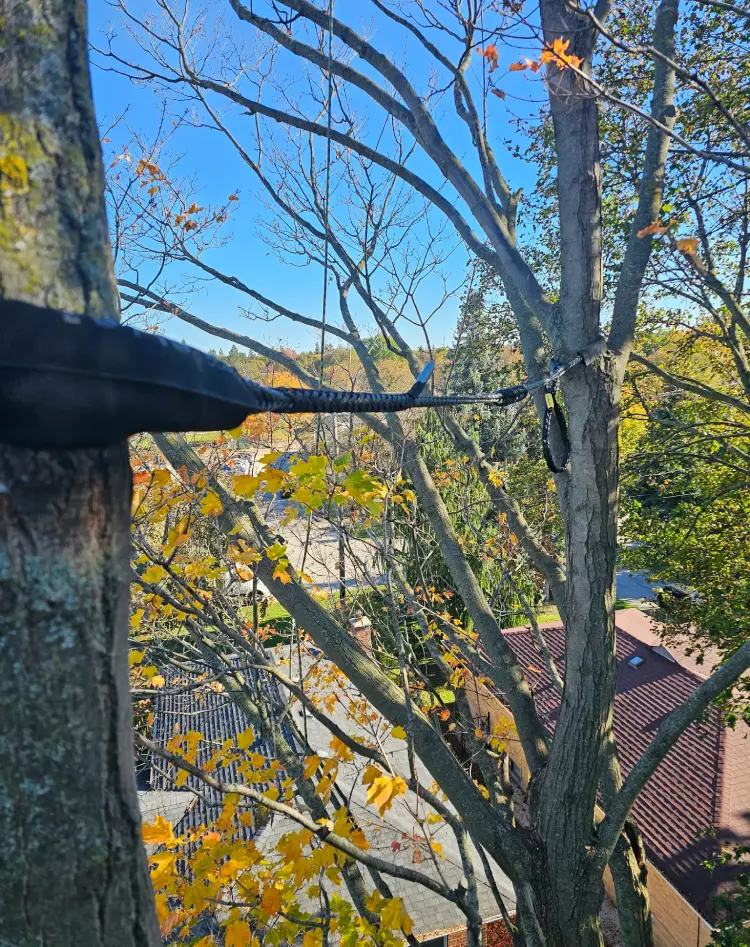
A new cable, properly installed with a protective sheath and plenty of room for the stem to keep growing.
The sheath sits where the rope wraps the stem. It spreads the load and keeps the rope from rubbing through the bark, and the oversized loop gives the trunk years of growing room before anything needs adjusting.
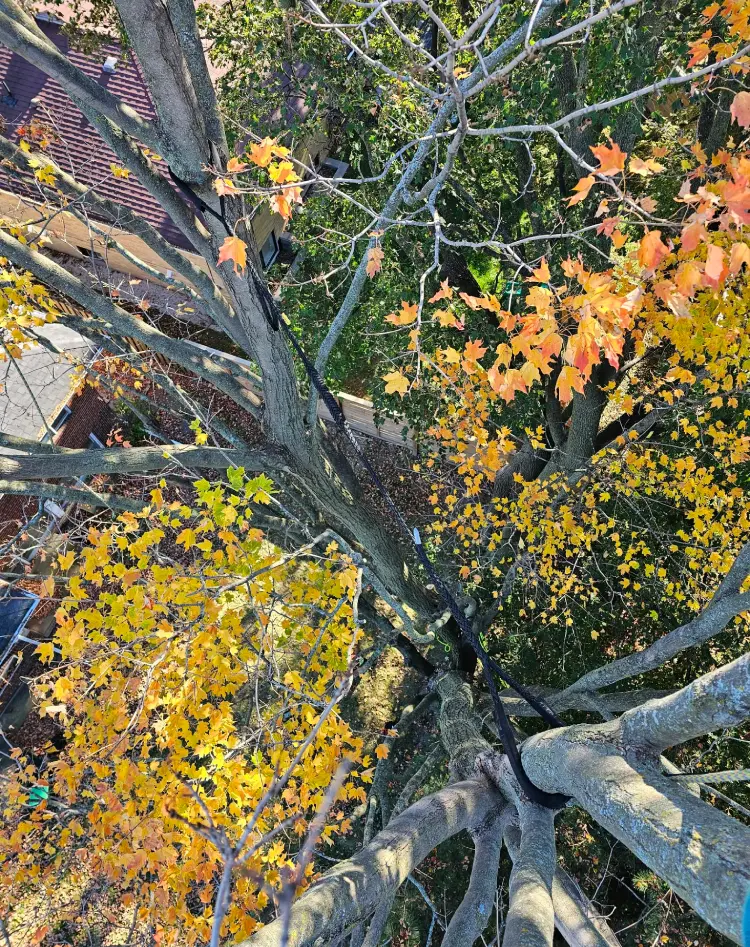
A new support cable with just enough slack to let the limbs grow stronger while supporting them during storms.
On a calm day the rope hangs with a slight curve. In a strong wind the limbs can still flex, and the cable only goes tight when they spread far enough to strain the union.
How Often Should Tree Cables Be Inspected?
We recommend having cabled trees checked every one to two years, and after any major storm. An inspection means a climber goes up to the cable and looks at the rope, the attachment points and the bark around them. Binoculars from the ground can catch a snapped line, but they won’t show early wear or a loop that’s starting to tighten.
If you don’t know when your cables went in, or you’ve moved into a home or commercial property that already had them, that alone is a good reason to have them looked at.
Book a Tree Cable Inspection in Mississauga and the GTA
Our professional team at J&C Tree Services has been climbing and caring for trees across Mississauga and the Greater Toronto Area for over 12 years. We inspect existing systems, remove expired cables with care, and install new support that works with the tree as it grows. We’d rather save a tree that can be saved, and swapping out a worn cable before it fails is one of the easiest ways to do it.
Call us at (416) 997-7280 or schedule a consultation.