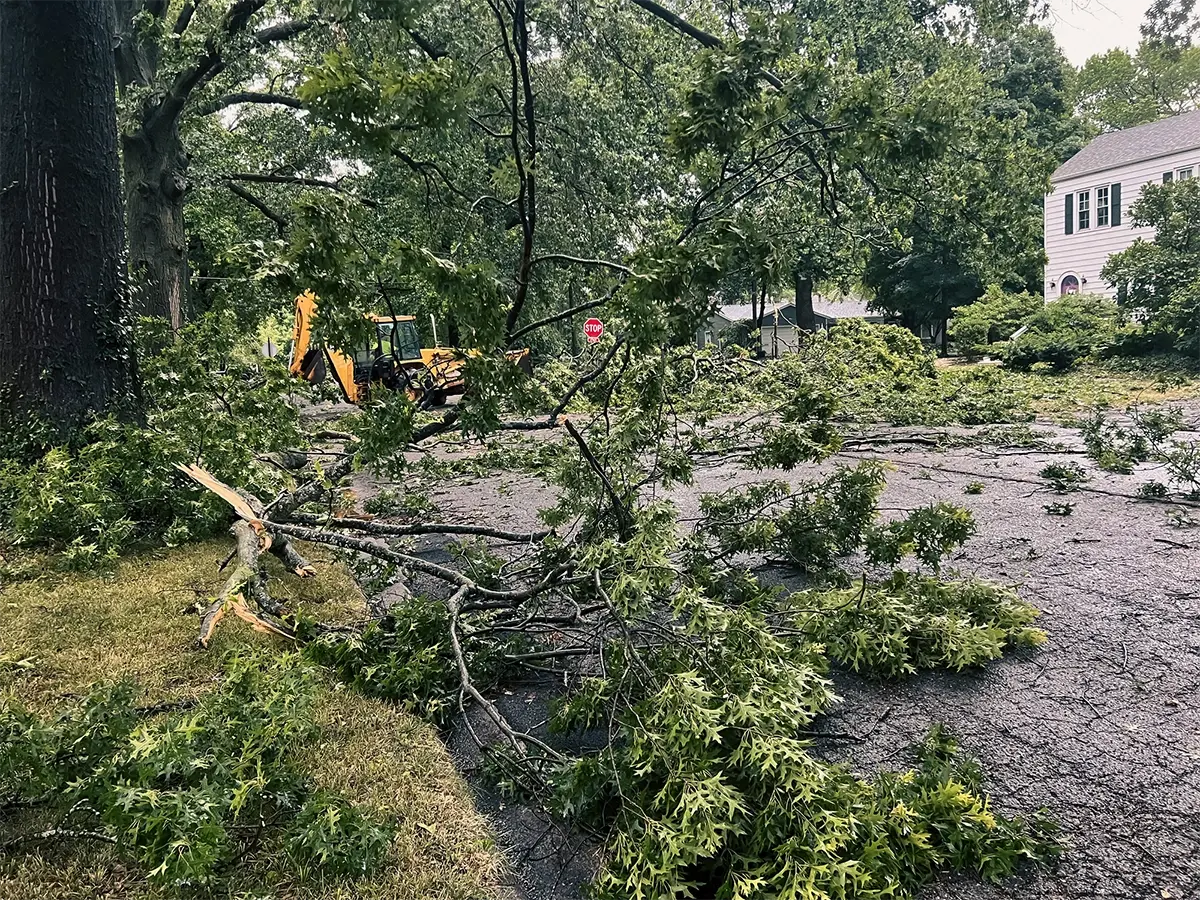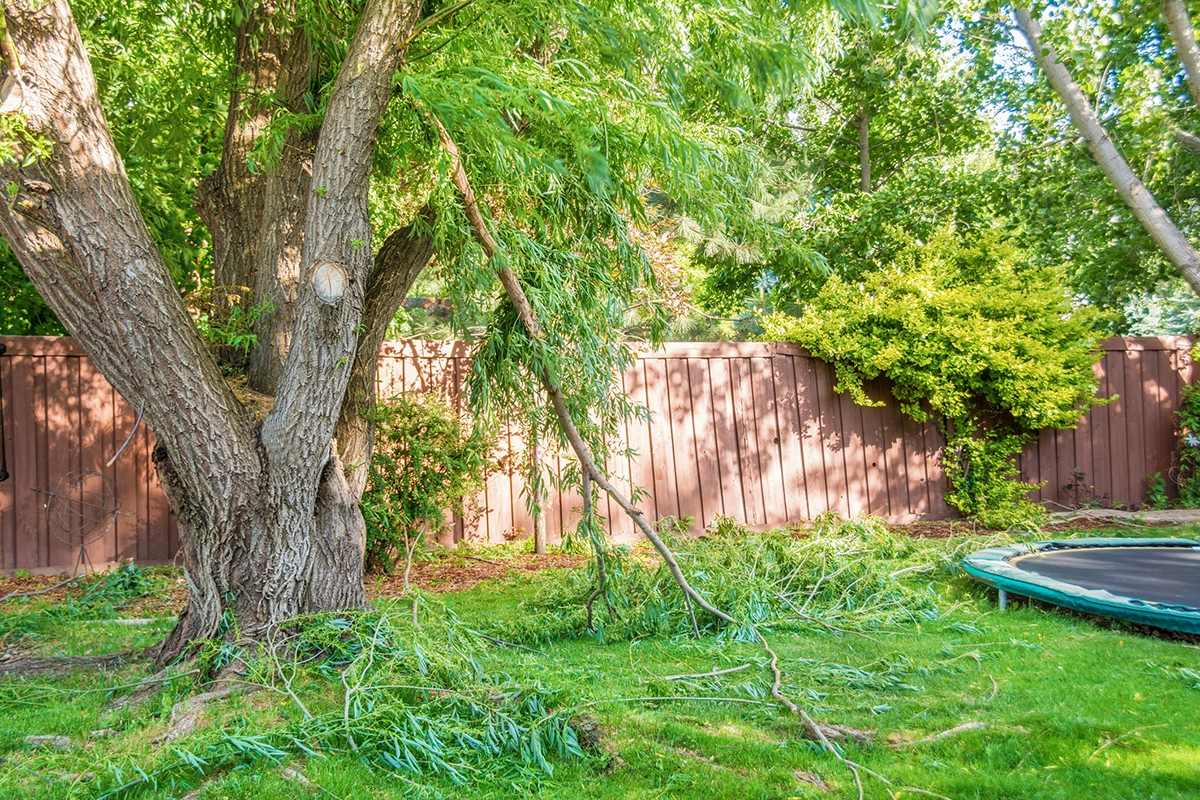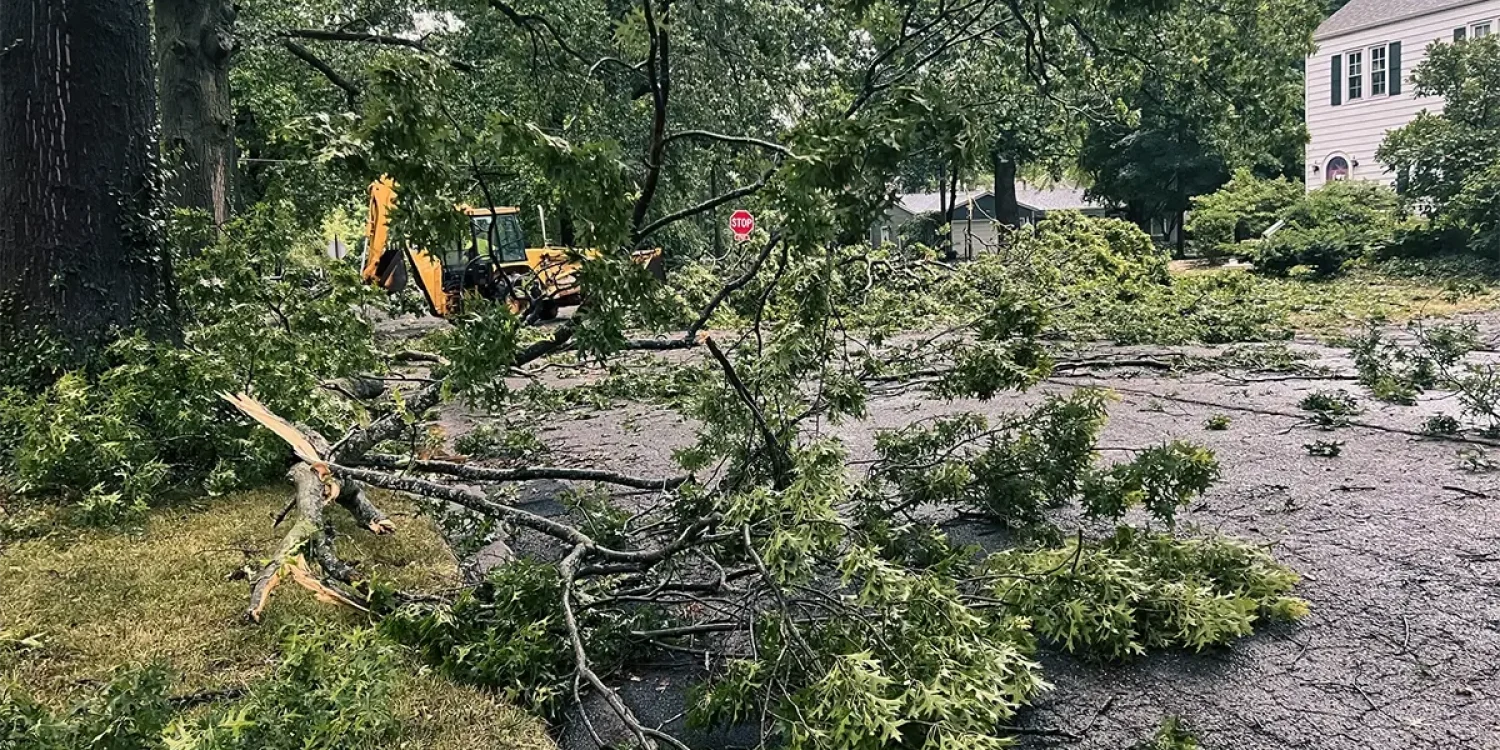
Structural defects of trees are one of the leading causes of branch failure and tree collapse during Toronto’s storm season. High winds, heavy rain, saturated soil, and severe thunderstorms can expose hidden weaknesses that may cause large limbs or entire trees to fail without warning.
As arbourists, we regularly inspect trees throughout Toronto and the GTA that appear healthy on the surface but contain serious problems internally. Many dangerous tree defects develop gradually over time and only become obvious once storms place the tree under extreme stress.
Understanding the warning signs of structural instability can help homeowners identify hazardous trees early, reduce the risk of property damage, and determine when tree professional intervention is necessary.
What Are Structural Defects of Trees?
Structural defects of trees are weaknesses within the trunk, branches, canopy, or root system that increase the likelihood of branch failure or tree collapse during severe weather conditions.
One of the most common misconceptions homeowners have is that dangerous trees always appear dead or visibly unhealthy. In reality, many structurally compromised trees continue producing full foliage and active growth despite serious internal weaknesses.
From an arbourist’s standpoint, these issues often develop gradually over many years. Internal decay, weak branch unions, stress fractures, and root instability may remain hidden until high winds or saturated soil conditions place additional pressure on the tree.
In older Toronto neighbourhoods with mature tree canopies, we frequently see defects that have been developing long before homeowners notice visible symptoms. This is why tree professionals inspect the entire structure of a tree rather than relying solely on outward appearance.
Why Are Weak Tree Unions Dangerous During Storm Season?
Weak branch unions are among the most common structural defects of trees associated with storm-related tree failure.
One of the most serious examples involves co-dominant stems, which occur when two main stems grow side by side and compete for dominance instead of developing one strong central trunk. As the tree matures, bark can become trapped between the stems. Arbourists refer to this as included bark, and it creates a weak attachment point that cannot properly support canopy weight over time.
During severe weather, wind movement places significant stress on these weak unions. Trees with pronounced “V”-shaped crotches are often far more vulnerable to splitting during strong winds or heavy rainfall.
These attachment points are critical areas of concern because they frequently become failure points in mature urban trees throughout Toronto and the GTA.
What Do Cracks in a Tree Trunk Mean?
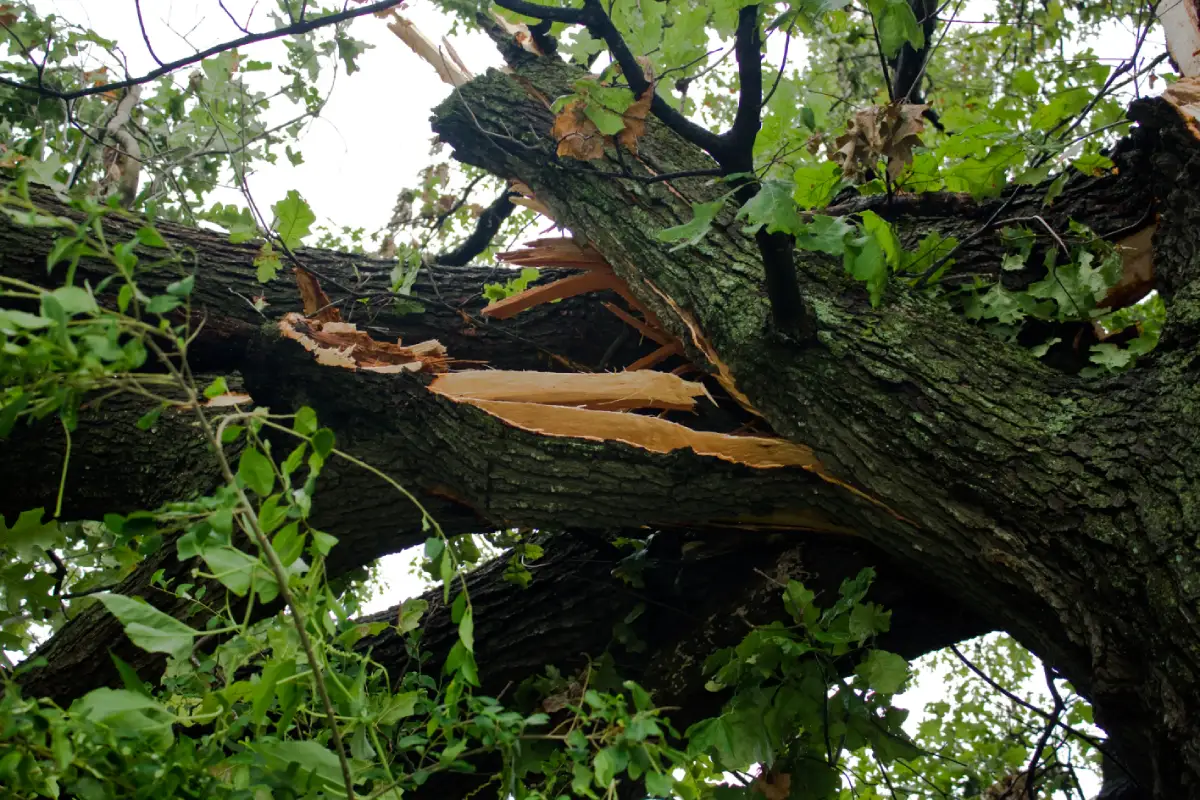
Visible cracks in a tree trunk or large scaffold branch should always be taken seriously because they often indicate stress, internal weakness, or progressive decay.
Some cracks develop suddenly during storms, while others form gradually because of uneven canopy weight, decay, poor structural development, or repeated environmental stress over time.
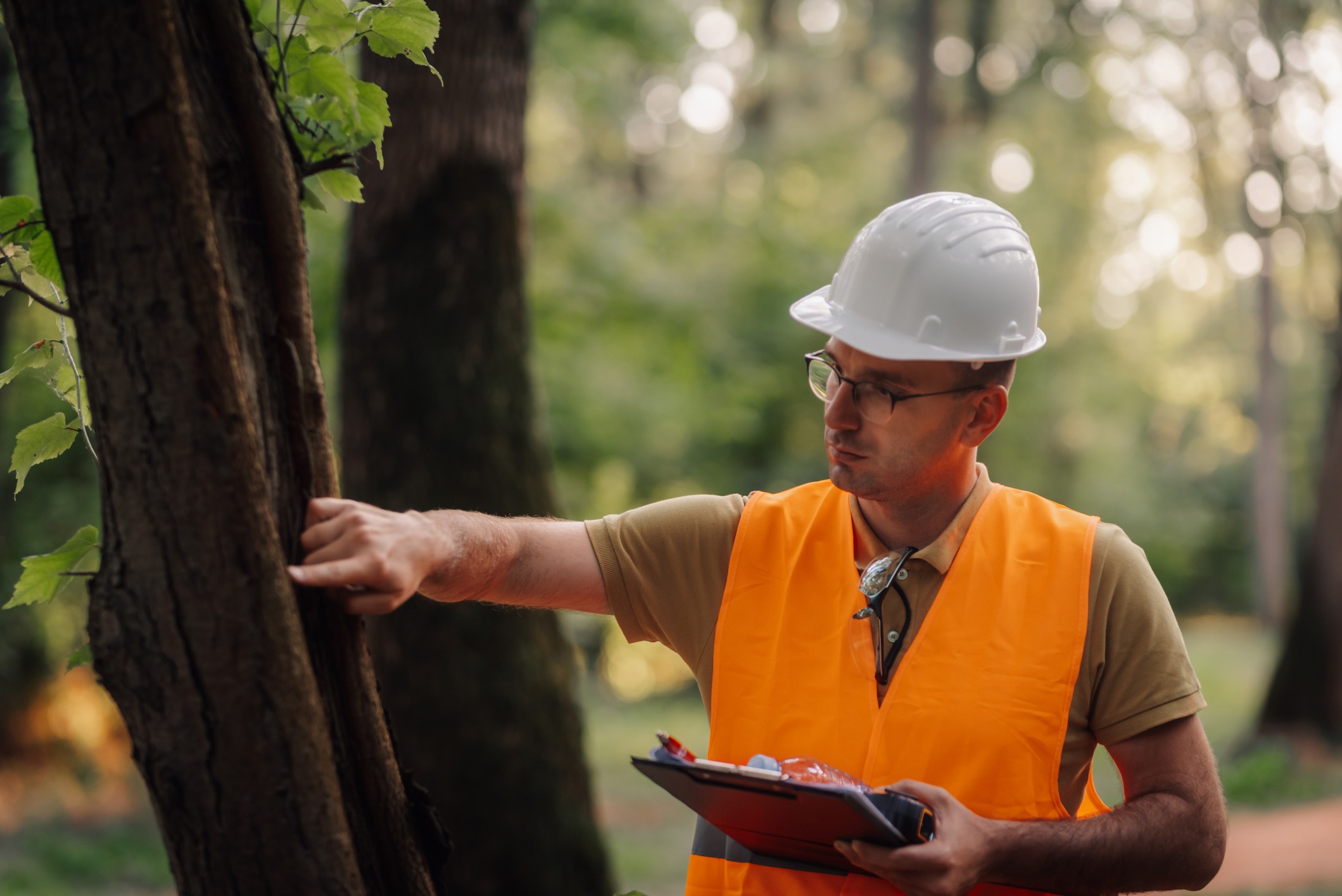
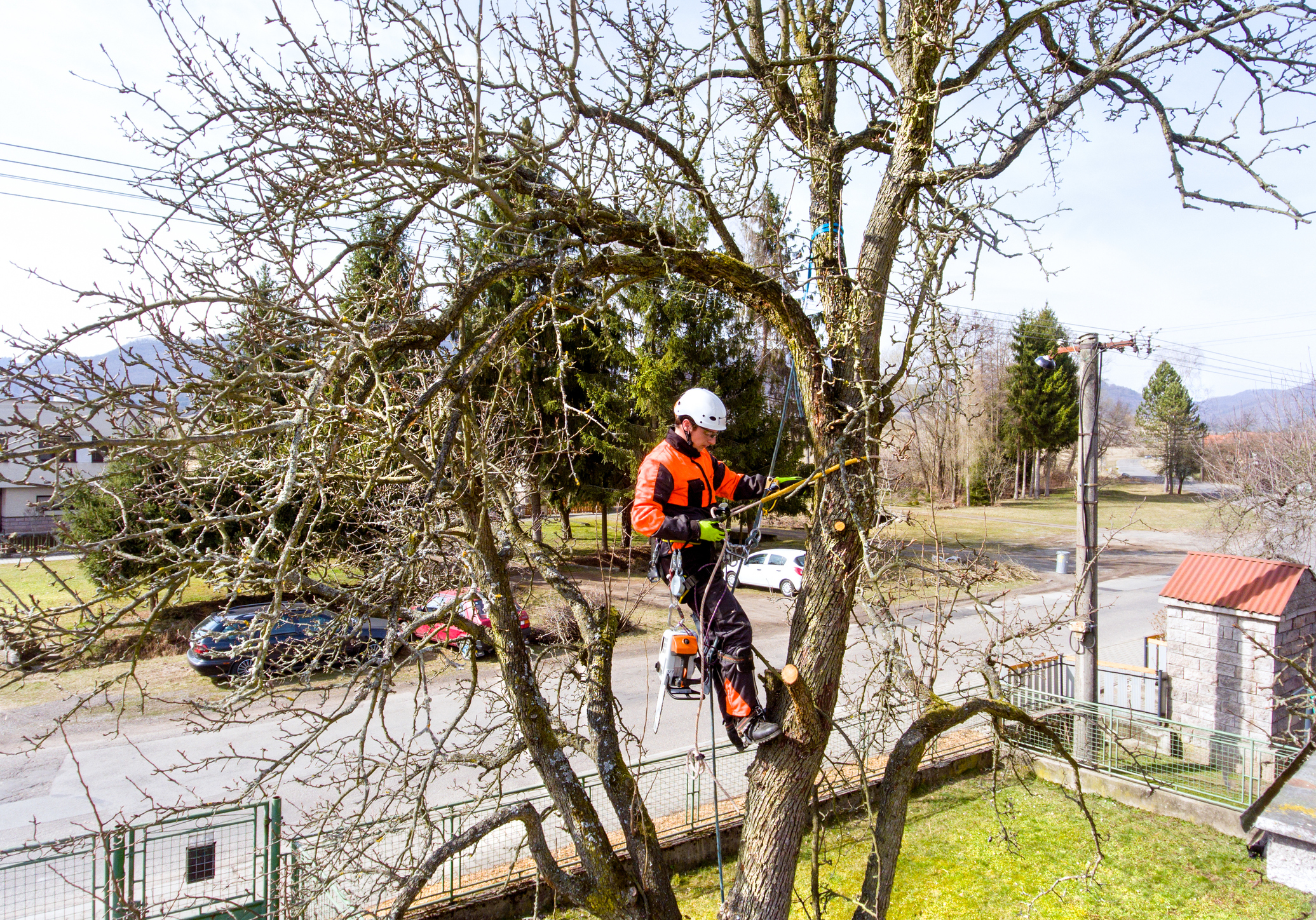
As tree professionals, we often assess scaffold branches using a top-down inspection approach that begins in the upper canopy and works downward. This allows us to identify weak branch attachments, hidden fractures, and signs of structural fatigue that may not be visible from the ground.
If a crack extends deeply into the trunk or through a major branch union, the risk of sudden failure increases substantially. For homeowners, this means even a tree that appears healthy may require immediate professional evaluation if cracking is present.
How Crown Asymmetry Affects Tree Stability
Crown asymmetry occurs when a tree develops uneven canopy growth that places excessive weight on one side of the tree.
In urban environments like Toronto, this condition commonly develops because of nearby buildings, repeated pruning, limited sunlight exposure, or competition from surrounding trees. Over time, the canopy becomes imbalanced and changes how the tree responds to wind stress.
When strong winds push against an uneven canopy, excessive pressure is transferred into the trunk, root system, and branch attachments on one side of the tree. This imbalance can gradually weaken the tree’s stability and increase the likelihood of branch failure or uprooting during storms.
We regularly see this issue in mature trees growing near homes, laneways, fences, and confined urban spaces where natural canopy development has been restricted for years.
Can Hidden Decay Cause Structural Defects In Trees?
Some of the most dangerous structural defects of trees remain hidden internally for years before visible symptoms appear.
Decay columns can gradually spread inside the trunk or major limbs while the tree continues producing healthy foliage externally. As decay progresses, the wood loses strength and becomes increasingly vulnerable to failure during high winds, ice accumulation, or saturated soil conditions.
During inspections, arbourists pay particularly close attention to branch attachment points because decay commonly develops where large limbs connect to the trunk. Wound closure patterns around old pruning cuts or storm injuries can also reveal valuable information about the tree’s condition.
Poor wound closure, hollow trunk sections, fungal growth, or exposed decaying wood may indicate ongoing decline to the tree’s structure that requires assessment by a tree professional.
In many storm damage evaluations throughout the GTA, we find that internal decay had been developing long before homeowners noticed visible warning signs.
Can Changes in Leaves Indicate Structural Problems in Trees?
Changes in foliage are not always a cause for concern themselves, but they are often early indicators of larger health or stability concerns within the tree.
Canopy thinning, premature leaf drop, sparse growth, or dieback may suggest underlying stress affecting the tree’s vascular system, root stability, or overall resilience.
In our experience, homeowners are often surprised to learn that declining canopy density can sometimes point to internal root damage, decay, or stress occurring elsewhere within the tree.
Although leaf symptoms alone do not always indicate immediate structural danger, they are frequently connected to broader health issues that reduce the tree’s ability to withstand severe storm conditions throughout Toronto and the GTA.
How Heavy Storms Cause Root Failure in Trees
Storm damage doesn’t always appear immediately after severe weather passes. Trees can suffer hidden root damage, crown twisting, or internal fractures that continue worsening long after the storm ends.
High winds place tremendous stress on the root system, particularly when prolonged rainfall saturates the soil and reduces root stability. In Toronto’s urban environment, compacted soils and restricted growing spaces can make mature trees even more vulnerable to storm-related root failure.
Signs of root instability may include sudden leaning, cracking near the root flare, raised soil around the base of the tree, or noticeable canopy imbalance following severe weather.
Once root stability becomes compromised, predicting the long-term safety of the tree becomes far more difficult. From an arbourist’s perspective, these conditions should always be professionally evaluated as quickly as possible.
When Should You Call an Arbourist About Structural Defects of Trees?
Homeowners should arrange a professional tree inspection immediately if they notice deep trunk cracks, hanging or partially broken limbs, sudden leaning after storms, hollow trunk sections, weak “V”-shaped branch unions, raised soil near the base of the tree, major deadwood throughout the canopy, or visible canopy decline.
Trees displaying several of these warning signs simultaneously are often at a much higher risk of failure during severe weather conditions. In many cases, dangerous defects develop gradually and may only become obvious once storms place the tree under significant stress.
Early identification is one of the most important steps in preventing storm-related tree damage and protecting nearby homes, vehicles, and surrounding property.
Protect Your Property From Structural Defects of Trees During Toronto’s Storm Season
Structural defects of trees rarely improve over time, especially when trees are repeatedly exposed to high winds, saturated soil conditions, and severe storms throughout Toronto and the GTA.
Early intervention by a tree professional can often reduce risk, preserve healthy trees, and prevent costly storm damage before failure occurs. Depending on the condition of the tree, corrective action may include pruning, cabling, bracing, disease management, storm damage mitigation, or removal when necessary.
If you’re concerned about structural defects of trees on your property, J&C Tree Services can provide professional tree inspections, storm risk assessments, pruning, emergency tree removal, and 24-hour storm response services throughout Toronto and surrounding communities.