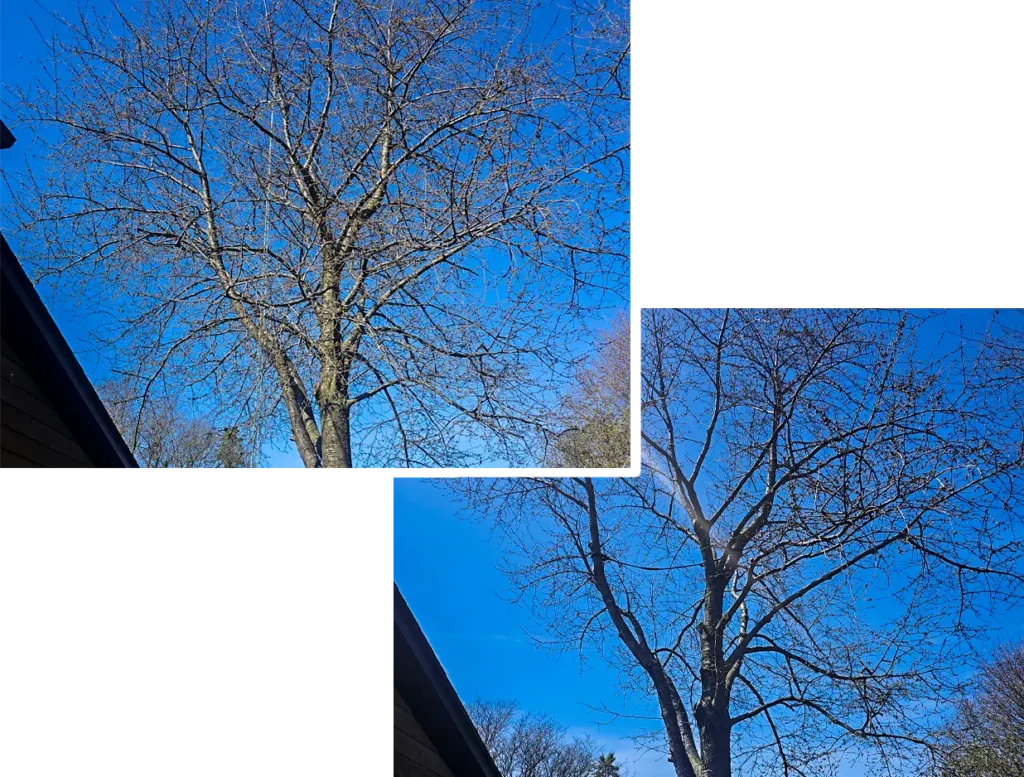
Tree Pruning
& Trimming

Trees don’t ask for much, but they do need the occasional check-in. A few overgrown branches here, a bit of deadwood there, and before long a healthy tree starts working against itself, blocking its own light and putting extra strain on the branches doing all the work. Regular tree pruning and trimming keeps that from happening.
We take care of tree pruning and trimming for homeowners and businesses across the Greater Toronto Area. Our arborists have spent over 12 years learning how GTA trees grow, what our winters and storms do to them, and what kind of pruning actually helps.
Whether you’re removing hazardous limbs, improving a tree’s health, creating clearance around your home, or reducing the risk of storm damage, our professional tree pruning and trimming services help keep trees healthy, attractive, and structurally sound.
Call now
& get a quote
Is It Pruning or Trimming You Need?
The two terms get used interchangeably, but they solve different problems. Trimming shapes a tree, keeping its size and spread under control so branches stay clear of your roofline, siding, and power lines. Pruning is more surgical. It targets specific branches that are dead, diseased, or crowding out healthy growth, so the tree can put its energy where it actually matters.
Most properties benefit from a combination of tree pruning and trimming, and part of our first visit is determining the right approach.
What Regular Tree Pruning & Trimming Does for Your Trees
Most people notice the difference after pruning because their yard looks cleaner and more open, but the biggest benefits happen inside the tree. Removing dead, damaged, or overcrowded branches lets more sunlight and air move through the canopy, which encourages healthier growth and makes it harder for fungal diseases to take hold. With less weight and fewer competing branches, the tree can put its energy into developing a stronger, more balanced structure.
That healthier structure pays off over time. Well-maintained trees are less likely to lose large limbs during wind or ice storms, making them safer around homes, driveways, and walkways. Regular tree pruning and trimming also helps extend a tree’s lifespan, improves its appearance, and catches small problems before they become expensive ones. It’s one of the simplest ways to protect both your trees and your property.
Signs Your Trees Are
Overdue for Pruning
A few things tend to show up before a tree becomes a real problem.
- Branches that have died back and gone brittle
- Limbs crossing or rubbing against each other
- A canopy that’s grown so dense you can’t see daylight through it in places
- Branches creeping toward your roof, gutters, or the power line running to your house
- Any lean or growth pattern that’s changed noticeably since last year
If you’re seeing any of that, it’s worth getting a set of trained eyes on the tree before the next windstorm makes the decision for you.
What Corrective
Pruning Fixes
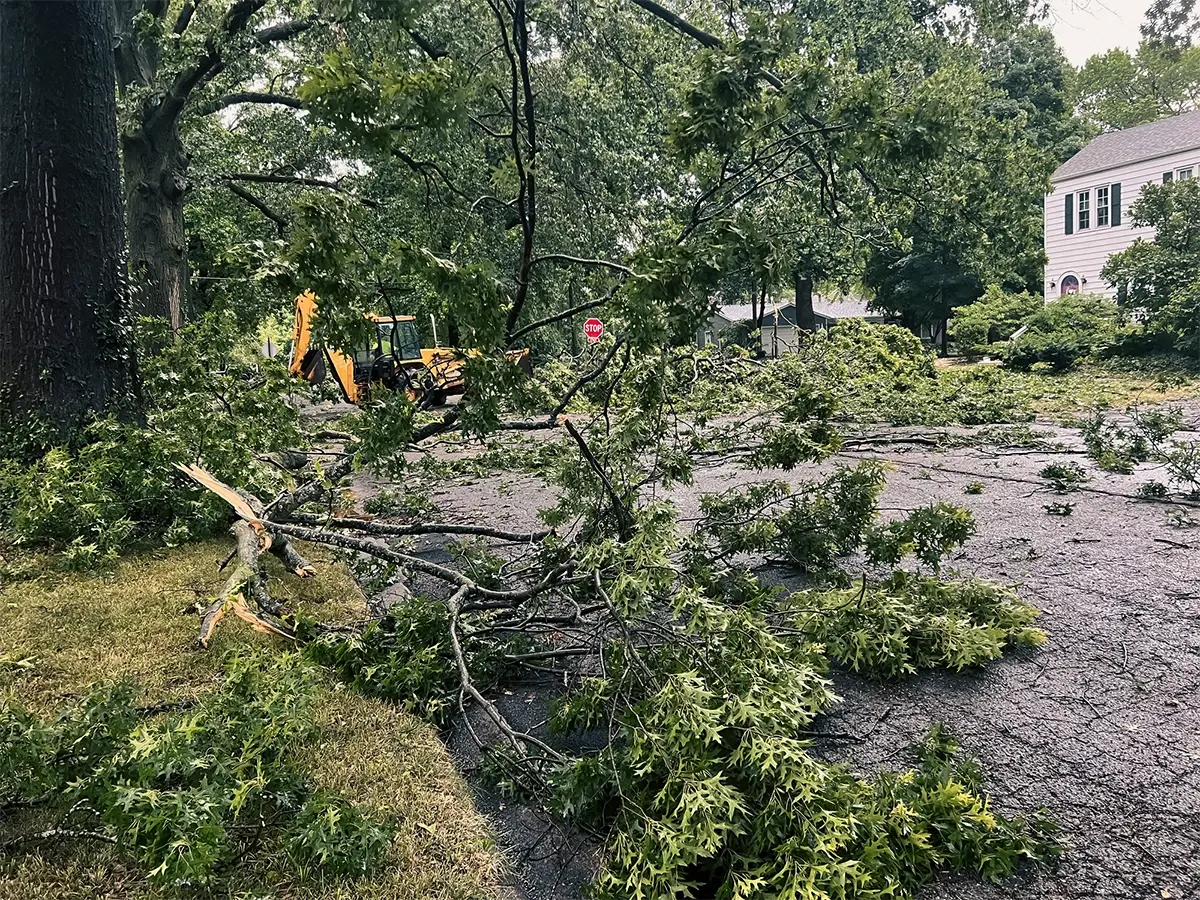
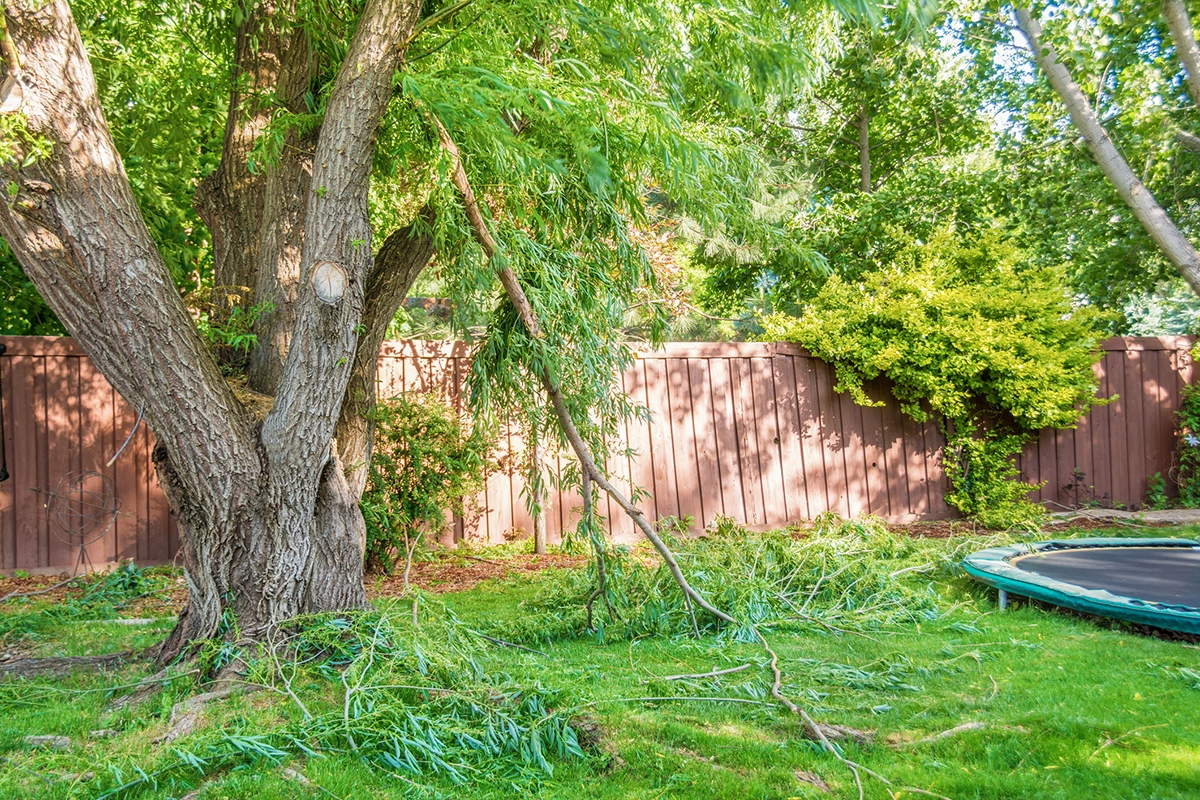
Our arborists use corrective pruning to address the issues that come up most on GTA properties. Disease gets cut out before it spreads through the rest of the tree. Pest-infested branches come off before the problem moves to neighbouring trees. Overcrowded canopies get thinned so sunlight and air can reach the inner branches again. Storm-damaged limbs get cleaned up so the tree can heal properly instead of scarring over a jagged break. And where a tree’s grown into a view or a planting bed, a bit of shaping opens things back up.
Why Improper Tree Pruning Can Do
More Harm Than Good
A tree doesn’t heal the way people often expect it to. Every cut creates a wound, and where that cut is made affects how well the tree can seal it off. Cuts made too close to the trunk (called flush cuts) remove the branch collar that helps the tree naturally close over the wound, while removing too much of the canopy at once can leave a tree stressed and struggling to produce enough energy for healthy growth.
Some of the biggest problems we see come from trees that have been topped to reduce their height. While it might seem like a quick solution, topping forces the tree to produce fast, weak regrowth that’s more likely to break in future storms. Over time, poor pruning practices can lead to decay, weak branch attachments, and structural problems that often require much heavier corrective pruning or, in some cases, complete tree removal. Good pruning isn’t about removing as many branches as possible. It’s about making the right cuts, in the right places, for the long-term health of the tree.
When Should Tree Pruning & Trimming
Be Done?
Most trees hold up well on a one to three year pruning cycle, though the right timing depends on the species and its age. Younger trees benefit from more frequent shaping while they’re still establishing their structure. A tree that’s just come through a storm or a disease issue often needs attention sooner rather than waiting for its regular cycle.
Late winter tends to be an ideal window for a lot of species, since the tree is dormant and it’s easier to see the full branch structure without leaves in the way, but not every tree follows that rule, which is part of why this isn’t a DIY job.
Different species respond differently to pruning. Silver maples often require more frequent structural pruning because of their fast growth, while mature oaks should usually be pruned outside periods when oak wilt is most active. Spruce, pine, and cedar each have their own pruning requirements. Our arborists adjust every pruning plan to the species rather than applying the same approach to every tree.
Our
Process
Step 1
We Assess
An arborist looks at the tree’s species, health, and structure before recommending anythingStep 2
We Explain
You’ll know exactly what we’re planning to remove and why, before any cuts are madeStep 3
We Prune
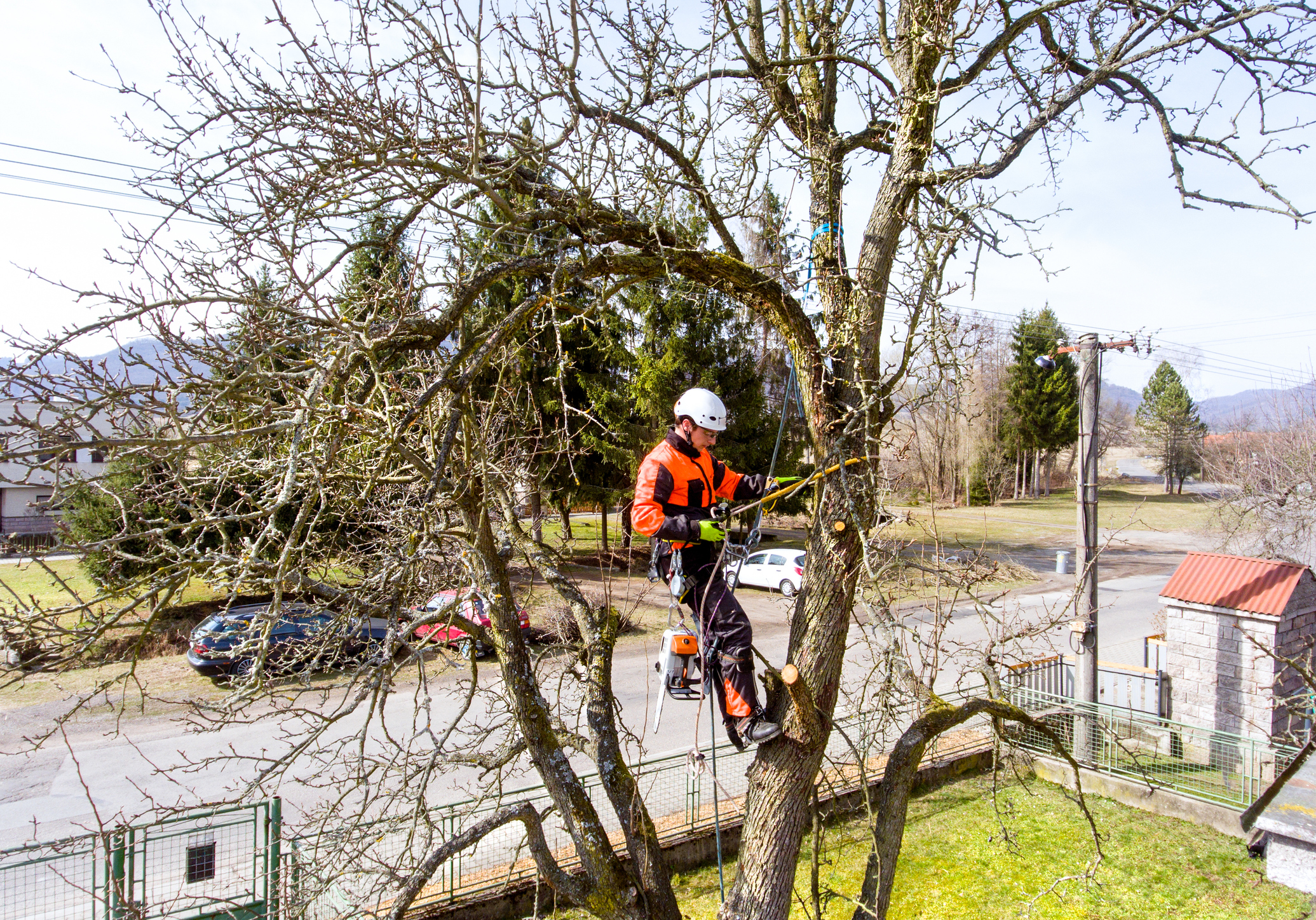
Our climbers use proper rigging and technique to remove the targeted branches safely.Step 4
We Clean Up
Every branch and piece of debris is cleared before we leave your property.Why GTA Homeowners Choose J&C Tree Services for
Tree Pruning & Trimming
A bad pruning cut doesn’t usually show itself right away. It shows up next season as dieback, or a few years later as decay working its way into the trunk, or a weak branch union that finally gives out in a storm. By the time you notice, the damage is already done and the tree is worse off than if it had been left alone.
That’s the real risk with pruning, and it’s why the person making the cuts matters as much as the fact that it gets done at all. Our arborists work from an understanding of tree biology, not just tree shape, so a cut is made with the branch collar, the growth direction, and the tree’s long-term structure in mind. We’re insured for the work we do, so a mistake on a ladder or a dropped limb near your house isn’t a risk that lands on you. After 12 years working GTA properties through our winters, ice storms, and humid summers, we’ve seen how local species actually respond to pruning, not just how they’re supposed to in a textbook.
The difference between a good pruning job and a bad one isn’t visible the day a service provider leaves. It shows up in how the tree looks and holds up a year from now.
Frequently Asked
Questions
Will pruning hurt my tree?
Done correctly, no. Removing dead or overcrowded branches actually improves a tree’s long-term health. The risk comes from improper cuts, which is why this is a job for a trained arborist rather than a homeowner with a ladder.
How long does a pruning visit take?
It depends on the tree’s size and how much work it needs, but most residential pruning jobs are completed in a single visit.
Do you prune trees near power lines?
Yes, our climbers are experienced working around power lines and know when a job needs extra caution or coordination with the utility company.
Can I prune my own trees instead of hiring an arborist?
For small branches within easy, safe reach, light trimming is reasonable. Anything requiring a ladder, a chainsaw, or work near power lines is where the risk to you and the tree goes up fast, and it’s where professional pruning earns its cost.
Is pruning covered by insurance if something goes wrong?
Our team is insured for the work we do, which protects your property if anything is damaged during the job. It’s worth asking any tree service you’re considering whether they carry the same coverage.
Do you offer pruning as part of a maintenance plan, or only one-off visits?
Both. Some clients book us for a single visit, others prefer a recurring schedule every one to three years so their trees stay ahead of problems instead of catching up on them.
How much of a tree can be pruned safely?
As a general guideline, no more than about 20–25% of a healthy tree’s canopy should be removed during a single pruning session. Removing too much can stress the tree and reduce its ability to recover.
Helpful Articles
From Our Blog


Request A
Tree Pruning Assessment
If your trees have gone a season or two without attention, we’re happy to take a look and tell you exactly what they need.